


 中文
中文


Processing methods and process flow of PCB high-frequency board
Time: 2011-12-28 21:06:22
Click:
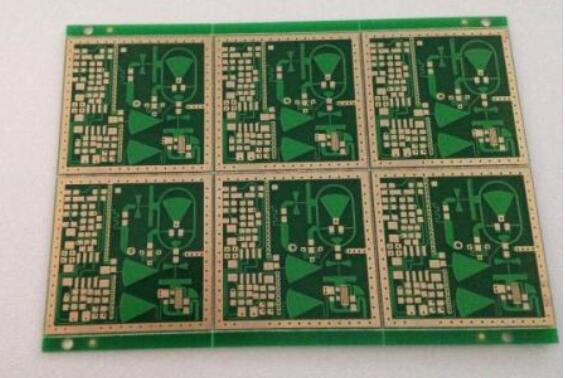
High frequency board refers to a special type of circuit board with high electromagnetic frequency, used for PCB in high-frequency (frequency greater than 300MHz or wavelength less than 1 meter) and microwave (frequency greater than 3GHZ or wavelength less than 0.1 meter) fields.
The definition of high-frequency board: High frequency board refers to a special type of circuit board with high electromagnetic frequency, used for PCB in high-frequency (frequency greater than 300MHz or wavelength less than 1 meter) and microwave (frequency greater than 3GHZ or wavelength less than 0.1 meter) fields. It is a circuit board produced on a microwave substrate copper-clad laminate using some processes of ordinary rigid circuit board manufacturing methods or special processing methods. Generally speaking, a high-frequency board can be defined as a circuit board with a frequency above 1GHz!
With the rapid development of science and technology, more and more equipment designs are applied in the microwave frequency band (>1GHz) and even in the millimeter wave field (30GHz) and above, which means that the frequency is getting higher and the requirements for the substrate of the circuit board are also increasing. For example, substrate materials need to have excellent electrical properties, good chemical stability, and minimal loss on the substrate with increasing power signal frequency. Therefore, the importance of high-frequency boards is highlighted.
Application areas of PCB high-frequency board:
Mobile communication products;
Power amplifiers, low-noise amplifiers, etc;
Passive components such as power dividers, couplers, duplexers, filters, etc;
The high-frequency development of electronic devices is a trend in fields such as automotive collision prevention systems, satellite systems, and radio systems.
Classification of high-frequency boards:
A. Powder ceramic filled thermosetting materials
1. Manufacturer:
Rogers Company's 4350B/4003C
Arlon's 25N/25FR
Taconic's TLG series
2. Processing method:
The processing flow is similar to that of epoxy resin/glass woven fabric (FR4), except that the board is relatively brittle and prone to breakage, and the lifespan of the drill bit and gong knife is reduced by 20% during drilling and gong board.
B. PTFE (polytetrafluoroethylene) material:
1、 Manufacturer:
Rogers' RO3000 series, RT series, TMM series
Arlon's AD/AR series, IsoCad series, CuClad series
Taconic's RF series, TLX series, TLY series
F4B, F4BM, F4BK, TP-2 from Taixing Microwave
2、 Processing method:
Cutting materials
The protective film must be retained during cutting to prevent scratches and dents
drill hole
1. Using a brand new drill bit (standard 130), stacking one piece at a time is optimal, with a foot pressure of 40psi
2. Aluminum sheet is used as the cover plate, and then a 1mm melamine pad is used to tighten the PTFE plate
3. After drilling, use an air gun to blow out the dust inside the hole
4. Use the most stable drilling rig with drilling parameters (basically, the smaller the hole, the faster the drilling speed, the smaller the Chip load, and the slower the return speed)
Hole treatment
Plasma treatment or sodium naphthalene activation treatment is beneficial for pore metallization
PTH copper deposition
After 1 micro corrosion (with a micro corrosion rate controlled at 20 micro inches), start feeding the plate from the oil removal cylinder in PTH
If necessary, a second PTH can be conducted, just from the estimated time? Cylinder begins to enter the plate
Solder mask
1. Pre treatment: Acid washing is used instead of mechanical grinding
Pre treated baking board (90 ℃, 30min), brush green oil for curing
Three stages of baking: one stage at 80 ℃, 100 ℃, and 150 ℃, each for 30 minutes (if any oil is found on the substrate surface, it can be reworked by washing off the green oil and reactivating it)
Gong board
Lay white paper on the PTFE board surface and clamp it with FR-4 substrate board or phenolic bottom plate with a thickness of 1.0mm etched to remove copper, as shown in the figure: high-frequency board and gong board stacking method
The burrs on the edge of the back plate of the gong board need to be carefully scraped by hand to prevent damage to the substrate and copper surface. They should be separated with sulfur free paper of equivalent size and visually inspected to reduce burrs. The key is to have a good effect on removing burrs during the gong board process.
3、 Process flow
1. NPTH PTFE plate processing flow
Cutting - Drilling - Dry Film - Inspection - Etching - Corrosion Inspection - Solder Resist - Character - Tin Spray - Forming - Testing - Final Inspection - Packaging - Shipping
2. Processing flow of PTFE plate for PTH
Cutting - drilling - hole treatment (plasma treatment or sodium naphthalene activation treatment) - copper deposition - plate electroplating - dry film - inspection - graphic electroplating - etching - corrosion inspection - solder mask - character - tin spraying - forming - testing - final inspection - packaging - shipment
4、 Summarize the difficulties in high-frequency board processing
1. Copper deposition: Copper is not easily deposited on the hole wall
2. Control of circuit gaps and sand holes in image conversion, etching, and line width
3. Green oil process: control of green oil adhesion and green oil foaming
4. Strictly control the scratching of the board surface in each process.

Address: Room 605, Building B, Bay Area Artificial Intelligence Industrial Park, Huanggangling Industrial Zone, Xixiang, Bao'an District, Shenzhen
Phone: 18025855806
Fax: 0755-27583285
Email:sd@dj-pcb.com
CopyRight © Shenzhen Dingji Electronics Co., Ltd. 粤ICP备16081348号 SITEMAP
Website Design:Yaqun Network
版权所有:深圳鼎纪电子有限公司
 QQ客服
QQ客服